NASA Artemis Program Faces Significant Challenges Ahead of 2028 Lunar Landings
A report from NASA’s Office of Inspector General has highlighted several serious issues within the Artemis lunar program, casting a shadow over the agency’s ambitious plans for human missions to the Moon. While NASA aims for two crewed lunar landings in 2028 with the Artemis-4 and Artemis-5 missions, significant risks remain, particularly concerning the development and safety of the lunar landers.
The report underscores that despite NASA’s efforts to mitigate potential catastrophic events, the agency currently lacks a viable plan to rescue a crew stranded on the Moon in a life-threatening emergency. This critical gap in emergency preparedness is a major concern as the program moves forward.
NASA is scheduled to launch Artemis-2 on April 1, a mission where astronauts will orbit the Moon. In 2027, prior to the planned landings, Artemis-3 will involve on-lunar orbit testing of two lunar lander modules being developed by SpaceX and Blue Origin. The Inspector General’s report, which specifically addresses these landers, indicates that human missions to the Moon will be exposed to considerable risks.
A key unresolved issue pertains to the manual control systems of the SpaceX and Blue Origin landers. These systems are intended to allow astronauts to take control in emergencies, but questions remain about their design and reliability.
For the 2028 landings, NASA plans to utilize one or both of the landers from SpaceX and Blue Origin, depending on which is ready first and successfully completes orbital testing. The SpaceX lander, a variant of the Starship spacecraft, stands at an imposing 52 meters tall. Before its lunar journey, Starship requires in-orbit refueling, a capability that SpaceX has yet to fully demonstrate with a successful launch, stable orbit, and refueling operation.
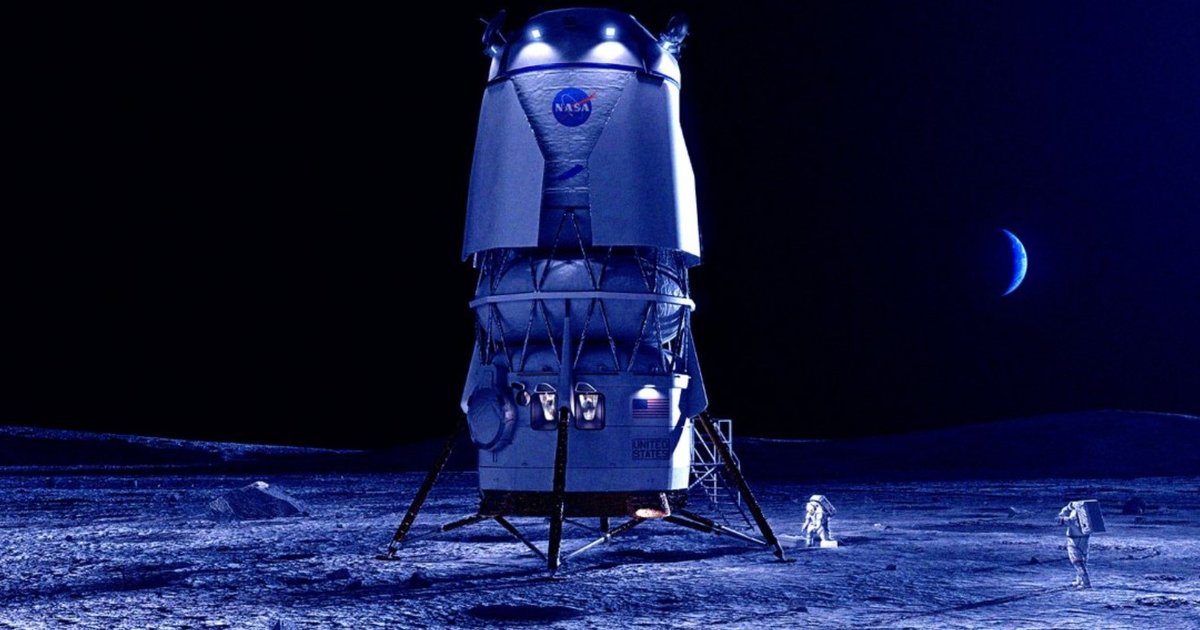
Blue Origin’s “Blue Moon” lander is smaller, standing 16 meters tall. It also requires orbital refueling before heading to the Moon to pick up astronauts for the surface descent. The outcome of the 2027 lunar orbit tests will determine which of these landers will be used in 2028.
The report also points out that landing near the Moon’s South Pole, a target for Artemis missions, presents greater challenges than equatorial landings conducted during the Apollo program. The steep slopes of up to 20 degrees at the South Pole complicate navigation and landing procedures. The sheer size of the Starship lander raises concerns about its inertia after landing, potentially leading to a tip-over. While the Blue Moon lander is smaller, it too faces potential landing risks. For comparison, the tallest lunar lander from the Apollo program was only 7 meters high.
Furthermore, the Starship lander will need an elevator system for crew egress to the surface. The report warns that a failure of this elevator system could create an extremely hazardous situation.
Despite these challenges, the Artemis program continues its development, with future missions aiming to establish a sustained human presence on the Moon and prepare for eventual journeys to Mars. However, the issues highlighted in the Inspector General’s report underscore the critical need for NASA and its commercial partners to address safety and technical hurdles before astronauts embark on these historic lunar missions.